Understanding Digital Marketing
Digital marketing encompasses all marketing efforts using digital channels. From search engines to social media, email to content marketing, digital marketing strategies help businesses reach, engage, and convert their target audience online. Understanding the fundamentals is essential for any brand looking to thrive in today's digital landscape.
The Digital Marketing Ecosystem
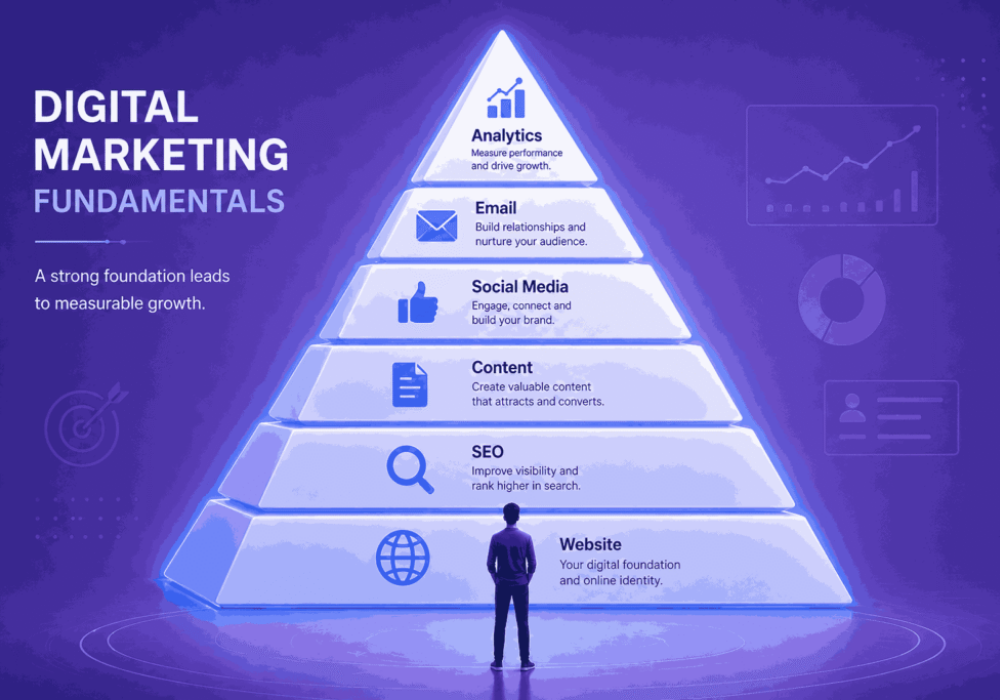
Digital marketing is not a single tactic but an integrated approach combining multiple channels and strategies:
- Search Engine Optimization (SEO): Improving visibility in search results
- Social Media Marketing: Building community and engagement on social platforms
- Content Marketing: Creating valuable content to attract and retain audiences
- Email Marketing: Direct communication with subscribers and customers
- Paid Advertising: Paid search, social ads, and display advertising
- Analytics: Measuring and analyzing campaign performance
Search Engine Optimization (SEO)
On-Page SEO Essentials:
- Keywords: Research and use relevant keywords naturally throughout content
- Titles & Meta Descriptions: Compelling, keyword-rich titles and descriptions
- Headers (H1, H2, H3): Proper header hierarchy improves readability and SEO
- Content Quality: High-quality, original content that provides value
- Mobile Optimization: Responsive design that works well on mobile devices
- Page Speed: Fast-loading pages improve user experience and rankings
Social Media Strategy
Choosing Your Platforms
Different social platforms serve different purposes. Facebook is broad and family-friendly, Instagram is visual and lifestyle-focused, LinkedIn is professional, TikTok skews younger and entertainment-focused. Choose platforms where your target audience spends time.
Content Strategy
Successful social media requires consistent, valuable content. Mix promotional content with educational and entertaining posts. Engagement is key—respond to comments, participate in conversations, build community. Authenticity and personality set you apart.
Community Building
Social media is not just broadcasting—it's building relationships. Respond to followers, ask questions, encourage user-generated content. A engaged community is more valuable than a large, inactive following.
Content Marketing
Content marketing attracts and retains customers through valuable, relevant content. This includes blog posts, videos, infographics, podcasts, and more. Great content:
- Answers questions your audience is asking
- Provides value without immediately asking for something in return
- Establishes your expertise and authority
- Is shareable and linkable
- Is optimized for search engines
Email Marketing
Building Your List
Email marketing requires an opt-in list of subscribers. Offer something valuable (guide, discount, exclusive content) in exchange for email addresses. A quality list of engaged subscribers is more valuable than a large list of disinterested subscribers.
Email Best Practices
- Personalization: Use subscriber names and segment lists for relevant content
- Mobile Optimization: Most emails are read on mobile devices
- Clear Call-to-Action: Tell subscribers exactly what you want them to do
- Testing: A/B test subject lines, content, and send times
- Frequency: Regular but not overwhelming emails keep you top-of-mind
Paid Advertising
Search Ads
Google Ads allows you to bid on keywords and appear at the top of search results. Highly targeted and effective for intent-driven traffic. You pay per click, only paying when someone clicks your ad.
Social Ads
Social platforms offer sophisticated targeting. Facebook, Instagram, and LinkedIn ads target based on demographics, interests, behaviors, and more. Visual platforms like Instagram excel for brands with strong visual identities.
Analytics & Measurement
Measure what matters to your business. Key metrics include:
- Traffic: Overall website visitors
- Conversion Rate: Percentage of visitors completing desired action
- Cost Per Acquisition (CPA): Cost to acquire each customer
- Return on Investment (ROI): Revenue generated vs. marketing spend
- Engagement: Likes, shares, comments on social media
- Email Metrics: Open rate, click-through rate
Digital Marketing Strategy
Define Your Goals
What does success look like? Increased brand awareness? More sales? Email subscribers? Clear goals guide strategy and help measure success.
Know Your Audience
Deep audience understanding informs content, channel selection, and messaging. Create detailed buyer personas that guide your marketing decisions.
Consistency
Digital marketing is a long-term commitment. Consistent, integrated efforts across channels yield better results than sporadic campaigns. Build brand presence gradually through regular content and engagement.
Conclusion
Digital marketing fundamentals—SEO, social media, content, email, and paid advertising—form the foundation of online success. By understanding these channels and implementing an integrated strategy, you can reach your audience where they spend their time and build a thriving digital presence.
Ready to develop a comprehensive digital marketing strategy? Let's grow your brand online.